

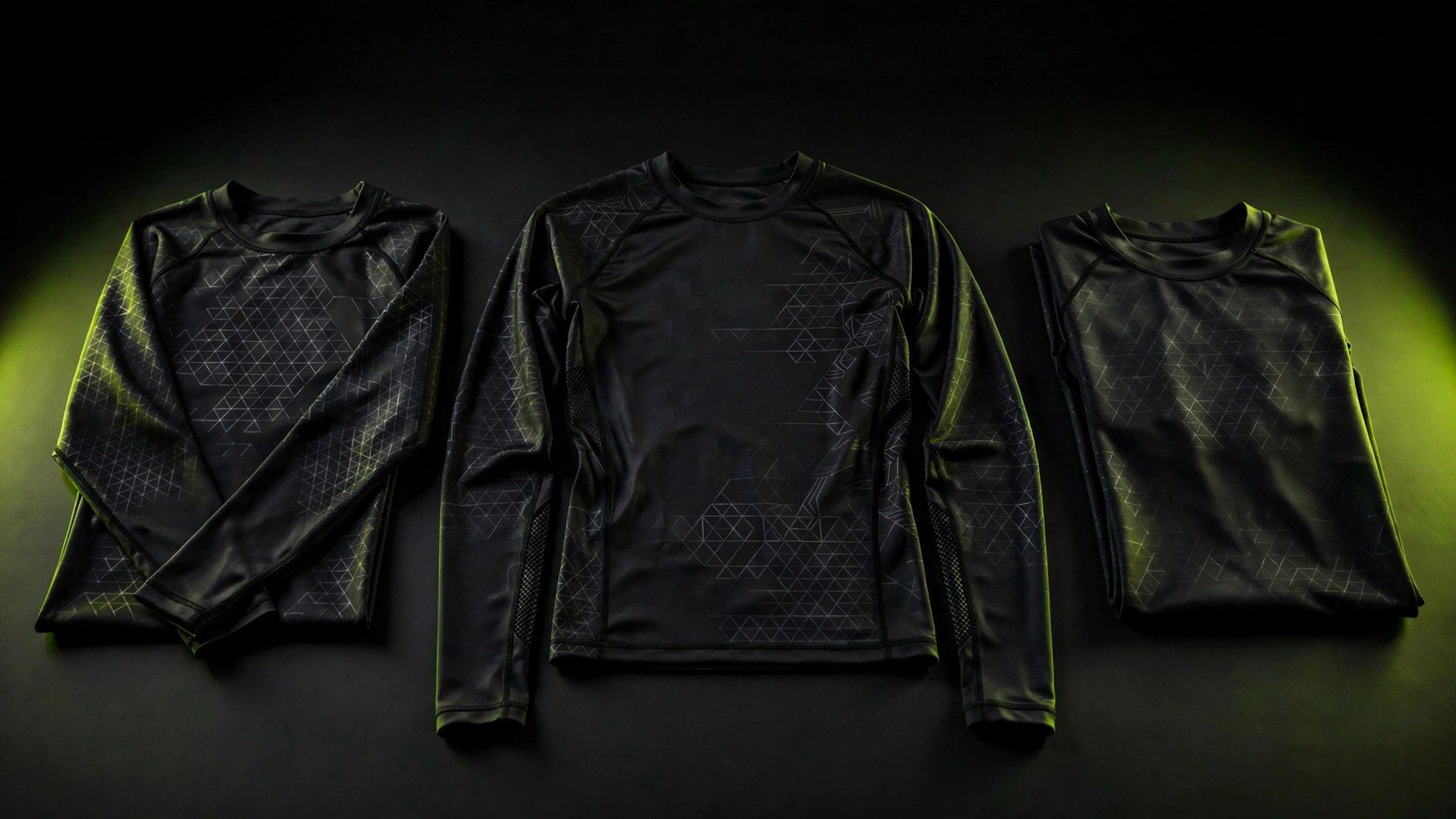
Custom rash guards for gyms are usually made from stretch performance fabric with a sublimated print, which allows full-colour designs, gym logos and fighter names across the whole garment. For a BJJ or MMA gym, the practical questions are less about design and more about specification: which fabric, how it is printed, how sizes are split, and how many pieces are needed for the first order.
This guide walks gym owners, academies and combat sports brands through each decision so a manufacturer can quote correctly the first time.What to decide before you order
- Use: BJJ (gi or no-gi), MMA, wrestling or general training. Grappling puts more stress on seams and fabric than striking.
- Sleeve length: short sleeve or long sleeve.
- Audience: members, competition team, coaches, or retail merchandise.
- Quantity range and size split.
- Branding: gym logo, sponsor logos, names, ranks or belt-colour systems.
- Timeline: event dates or grading dates you need stock for.
Fabric considerations
- Stretch and recovery: the garment should move with the athlete and return to shape after repeated washing.
- Fabric weight: lighter fabrics feel cooler; heavier ones can feel more durable and more opaque on light colours.
- Seam construction: flatlock stitching is widely used to reduce chafing, which matters in grappling.
- Colour fastness and wash performance: ask how the printed fabric performs after washing, and test samples at home.
Sublimation and other printing methods
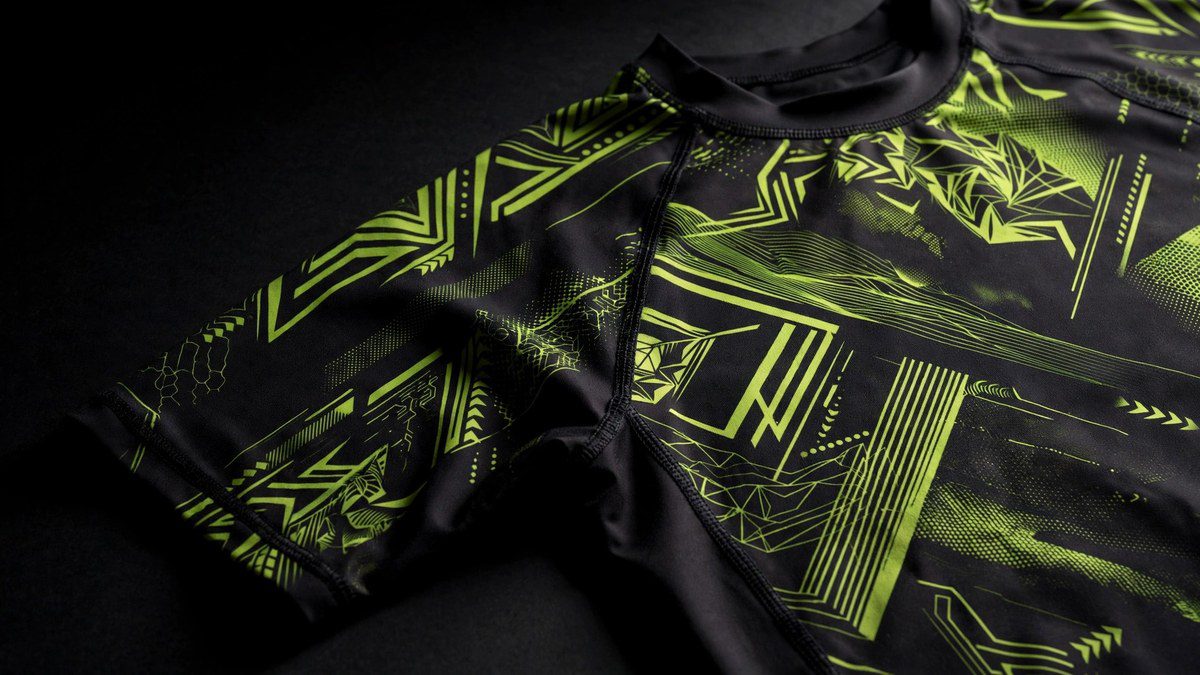
Design, names and branding
- Artwork format: supply vector files wherever possible, with Pantone or colour references.
- Placement: define logo size and position by size, since a chest logo that suits a medium may be too large on a small.
- Names and numbers: confirm whether these are printed in the sublimation run or applied separately, and how name lists should be supplied (spreadsheet with size per name).
- Colour matching: screen colours and printed colours differ. Ask for a physical sample for brand-critical shades.
- Competition rules: if members will wear them in competition, check the event or federation’s apparel rules before finalising design and colours.
Sizing for a gym or team
MOQ considerations
Sampling and prototypes
- whether the sample is made in the real fabric and print method,
- how many revision rounds are included,
- how sample approval converts to a production order.
Production lead time: what influences it
The bulk ordering process, step by step
- Send your specification and quantity range.
- Receive a quotation with fabric, print method, MOQ and terms.
- Approve artwork and size chart.
- Approve a sample.
- Confirm quantities, name lists and packaging.
- Production and quality checks.
- Shipping and delivery.
Questions to ask a rash guard manufacturer
- What is the fabric composition and weight?
- Is the print sublimated, and how is colour fastness tested?
- What is the MOQ for my design and size split?
- How are names and logos applied?
- What sample options are available, and at what cost and timing?
- How do you check quality before shipment?
- What packaging is available for retail or gym distribution?
FAQs
Stretch polyester and elastane blends are common because they handle sublimation, stretch and recover. The best choice depends on weight, seam construction and your members’ preferences, so test a sample.
Yes. Logos and names are usually included in the sublimated design or applied as a separate step. Confirm the method and name-list format with the manufacturer.
It varies by manufacturer, fabric and design. Ask for the minimum in writing for your specific order, and whether it applies per design or per order.
For full-colour, all-over designs on polyester, sublimation is generally the practical choice. Screen printing may suit very simple small logos on other fabrics.
It depends on sampling, artwork approval, fabric availability and order size. Ask for a staged timeline rather than one figure.
Yes, many UK gyms source from overseas. Ask about shipping method, duties and delivery responsibility before confirming, since these affect landed cost and timing.