

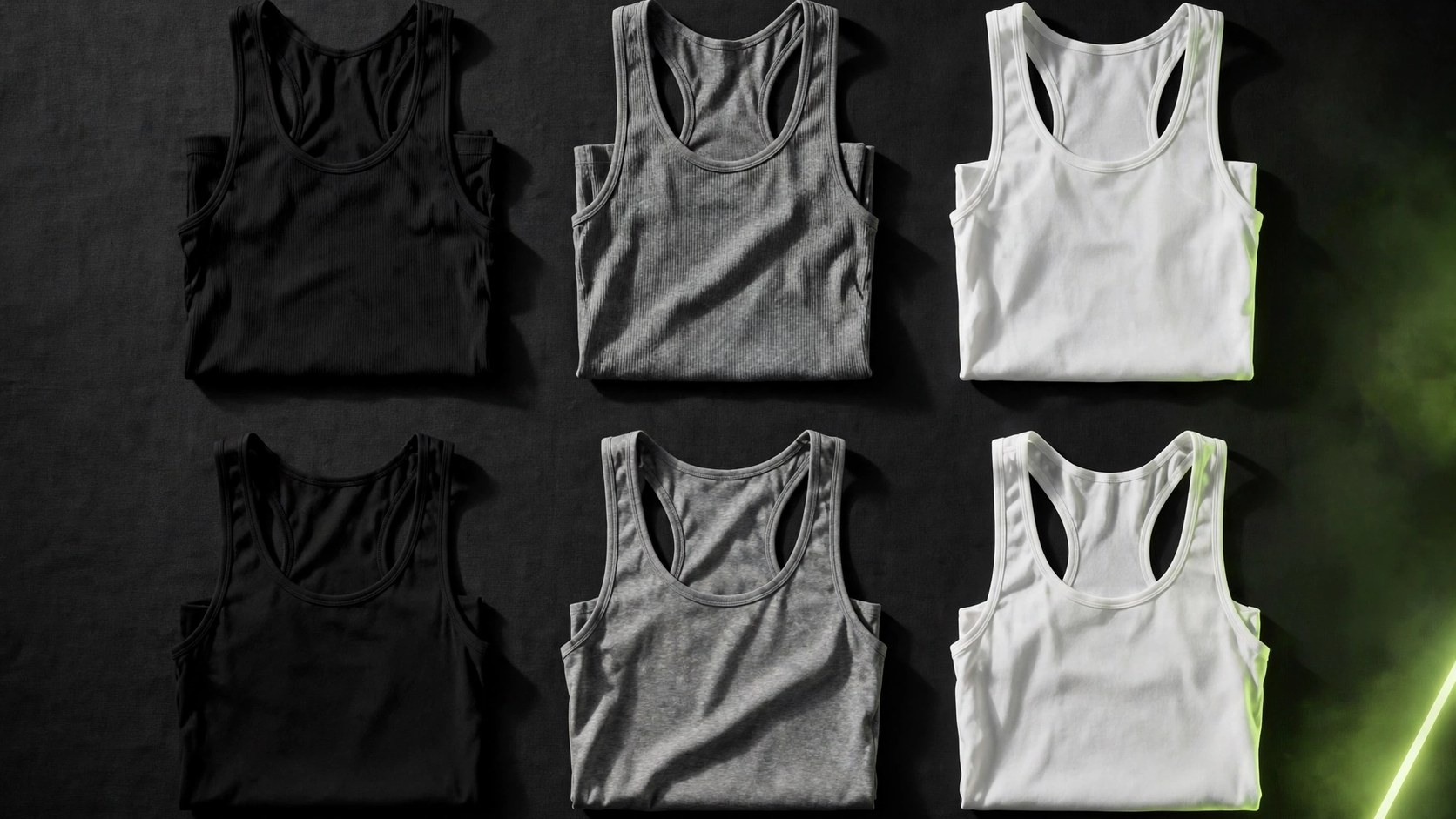
A low MOQ gym wear manufacturer is a producer that accepts smaller first orders than a standard bulk run, which lets a new fitness brand, gym or reseller test designs and sizes before committing to large volumes. There is no industry-wide number that counts as “low”. It depends on the garment, the fabric, the decoration and the factory, so the useful question is not “what is the MOQ?” but “what decides the MOQ for my order?”
This guide explains how minimum order quantities work for gym singlets, tanks and tees, how blank, custom and private label orders differ, and what to prepare so a manufacturer can quote accurately.What does low MOQ mean in gym wear manufacturing?
- Per style, per colour or per order. A figure that applies per order is more flexible than one that applies per colour.
- Size runs. Some factories need a minimum per size, others only per style, which affects how you split a small run across S to XXL.
Why MOQ differs between suppliers and products
| Factor | Why it influences MOQ |
|---|---|
| Fabric | Mills often sell fabric in minimum roll or dye-lot quantities. Stock fabric in standard colours is usually easier to work with at low volume than fabric dyed to a custom shade. |
| Pattern | An existing block needs little development. A new pattern needs pattern-making, grading and sampling first. |
| Decoration | Screen printing needs separate set-up per design and colour. Embroidery needs a digitised file. Sublimation depends on the print process and fabric. |
| Labels and packaging | Woven labels, hang tags and branded polybags often have their own minimums. |
| Factory model | Facilities set up for large teamwear runs and facilities set up for small fashion runs price small orders differently. |
Singlets, stringer vests, tanks and tees: what each one involves
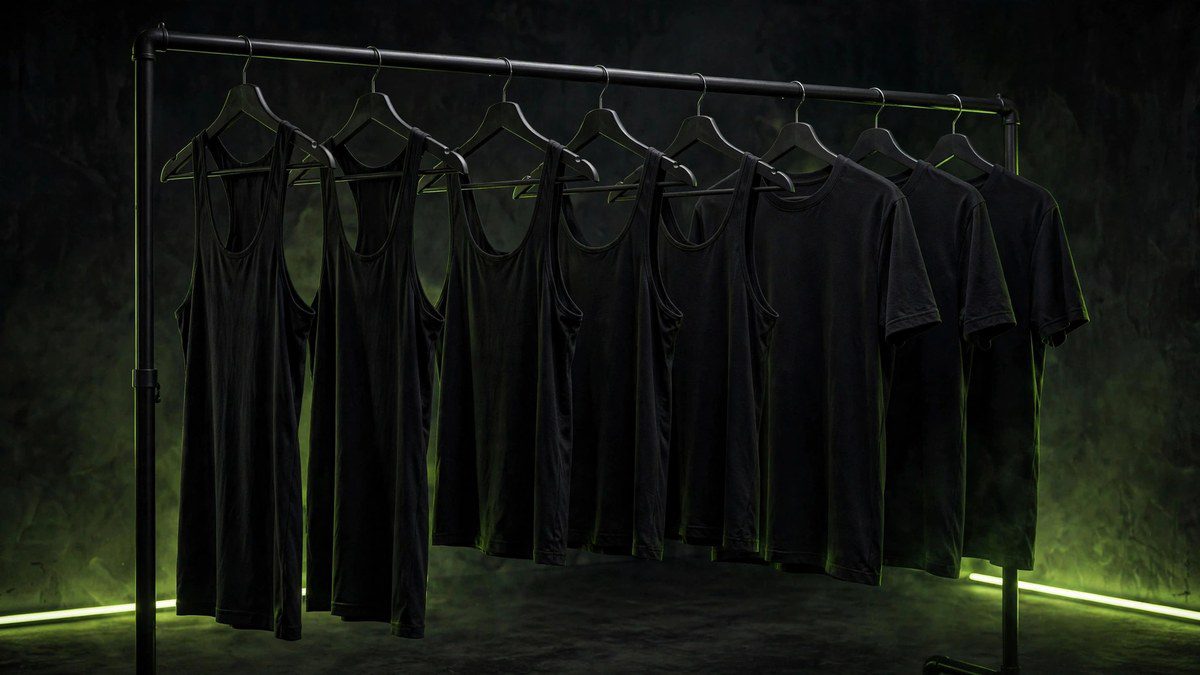
- Gym singlets: sleeveless tops, usually with a wider shoulder strap and a classic gym or training shape. Our range of low MOQ gym singlets sits in this category.
- Stringer vests: a sleeveless style with narrow straps and deep armholes, popular in bodybuilding and lifting. The deeper cut affects pattern and fit, so confirm armhole and strap measurements.
- Tank tops: often a slightly more fitted sleeveless top. Fabric choice (cotton, cotton blend or performance polyester) changes feel, price and decoration options.
- Gym tees: short-sleeved tops that add sleeve construction, which adds sewing operations and fabric use.
Blank, custom and private label: three different ways to order
| Order type | What it means | Typical buyer |
|---|---|---|
| Blank (wholesale) | Plain garments from a supplier’s existing styles, with no branding, bought in volume | Resellers, print shops, brands that decorate in-house |
| Custom | Existing style or block, decorated with your logo or artwork (print, embroidery, labels) | Gyms, clubs, small brands |
| Private label | Garments sold under your brand name, with your labels, packaging and often your own fit or pattern changes | Fitness brands building a product line |
Branding options for low-volume orders
- Screen printing: durable and cost-effective as quantities grow, but each colour adds set-up. Often best for simple one- or two-colour logos.
- Heat transfer: suits small runs and detailed logos, with different feel and durability to screen printing.
- Embroidery: a premium finish on chest or hem, better on stable fabrics than on very light or stretchy ones.
- Woven or printed neck labels and hang tags: these often carry their own minimums, so ask whether they can be added to a small run.
What to prepare before you contact a manufacturer
- Product type and quantity range: for example “tank top, first order of X to Y pieces”.
- Size split and fit notes: a size chart or reference garment.
- Fabric preference: composition, approximate weight and feel, or a reference sample.
- Colours: Pantone references or a swatch if colour matching matters.
- Artwork: vector files (AI, EPS or PDF) with placement and size.
- Labelling and packaging needs: neck labels, care labels, hang tags, polybags.
- Target market: shipping country, since labelling rules vary by market.
- Timeline: the date you need stock in hand, not just the order date.
Questions to ask a low MOQ gym wear manufacturer
- Is the MOQ per style, per colour or per order, and does it change with decoration?
- Can I split a small order across sizes?
- Do you offer blank stock styles, or only made-to-order?
- What does sampling cost, and how long does it take?
- Can labels and packaging be added at small quantities?
- Which decoration methods do you recommend for this fabric?
- How do you check quality before shipment?
- How are reorders handled, and does MOQ change on repeat orders?
How to request a quotation
FAQs
There is no fixed number. A low MOQ is a smaller minimum than a manufacturer’s standard bulk run, and it varies by garment, fabric and decoration. Confirm the exact minimum for your specific style in the quotation.
Often yes. Blank wholesale orders are a common route for resellers and print businesses. Availability depends on the manufacturer’s styles, so ask which blank singlets are offered and in what fabrics.
Wholesale usually means buying existing styles in volume, often unbranded. Private label means garments carry your brand, labels and packaging, and may include your own fit or pattern changes.
For an existing style with a logo, usually not; a clear brief and artwork file are enough. For a new pattern or detailed construction, a tech pack or reference garment helps avoid errors.
Custom dyeing often depends on mill minimums per colour and dye lot. Using stock colours can keep small orders more practical.
Sampling is standard practice in garment sourcing. Ask what the sample covers (fabric, fit, print) and how sampling cost and time are handled.
Compare the same specification: fabric composition and weight, decoration method, labelling, packaging, lead time and payment terms. A lower unit price can reflect a lighter fabric or fewer inclusions.